









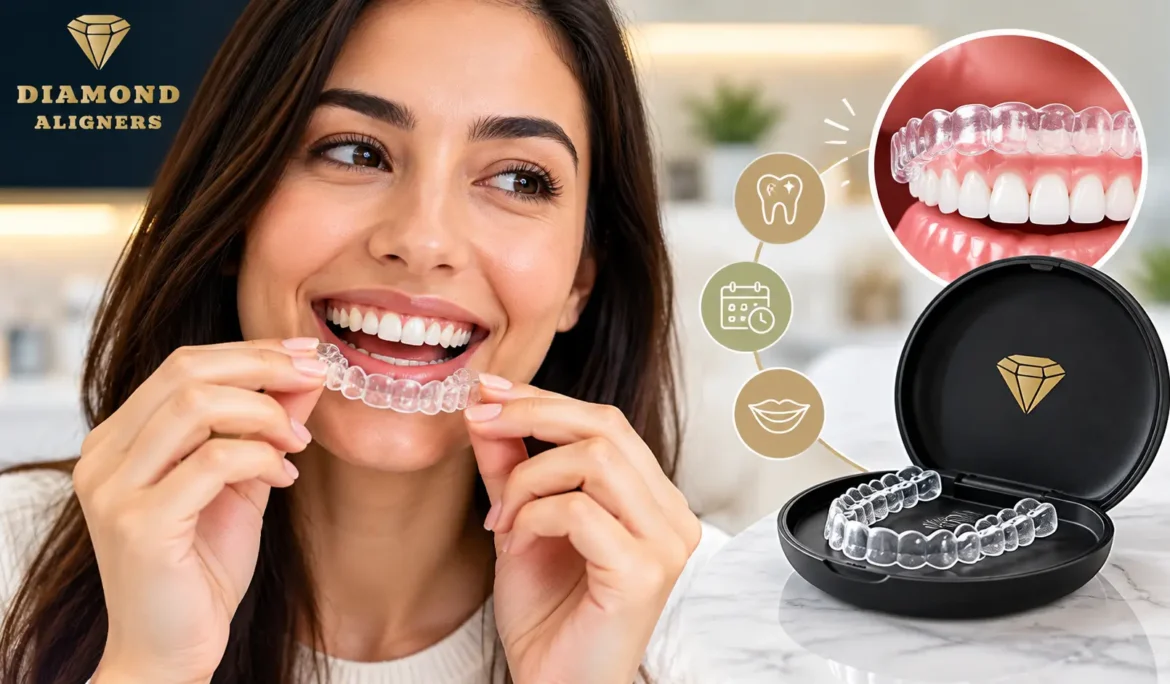
If you’ve ever wanted straighter teeth but didn’t want a mouth full of metal, invisible aligners may be the option you’re looking for. This guide explains what they are, how they work, who they suit, and what to expect, in plain language.
What Are Invisible Aligners?
Invisible aligners (also called clear aligners) are transparent, removable trays that gently move your teeth into a better position. Each tray is custom-made for your mouth, so it fits snugly and is hard for others to notice.
You don’t wear one tray for the whole treatment. You wear a series of trays, and each set moves your teeth a small step closer to the final smile your dentist has planned.
In short: clear plastic trays, made just for you, that straighten teeth without brackets or wires.
How Do Invisible Aligners Work?
The process is simple and follows the same steps for most people:
- Consultation: The dentist or orthodontist examines your teeth and checks whether aligners are right for you.
- Scans and records: Your teeth are scanned or measured, and photos or X-rays are taken.
- Treatment plan: A digital plan maps how your teeth will move, often with a preview of your expected result.
- Custom trays: Your series of aligners is made to match each stage of the plan.
- Wear and switch: You wear each tray for the time advised, usually 1 to 2 weeks, then move on to the next.
- Check-ups: Regular visits make sure your teeth are moving as planned.
- Retainers: After treatment, you wear retainers to keep your new smile in place.
Aligners apply gentle, controlled pressure. Over time, this guides teeth into their new positions.
What Problems Can Invisible Aligners Fix?
Aligners are commonly used for:
- Crowded teeth: not enough space, so teeth overlap
- Gaps between teeth
- Crooked or twisted teeth
- Overbite or underbite (mild to moderate cases)
- Teeth that have drifted after earlier treatment or a missed retainer
Very complex bite problems may need braces or another approach. Your dentist will tell you honestly which option suits you best.
Invisible Aligners vs. Traditional Braces
| Invisible Aligners | Metal Braces | |
|---|---|---|
| Look | Nearly invisible | Visible brackets and wires |
| Removable? | Yes | No |
| Eating | Take them out, eat anything | Some foods must be avoided |
| Cleaning | Brush and floss as usual | Harder to clean around wires |
| Comfort | Smooth plastic, fewer sore spots | Wires can irritate cheeks and gums |
| Check-ups | Fewer visits, often | Regular adjustment visits |
| Best for | Mild to moderate cases, image-conscious adults and teens | Complex cases |
Neither option is “better” for everyone. The right choice depends on your teeth, your goals, and your habits.
Benefits of Invisible Aligners
- Discreet: Most people won’t notice you’re wearing them.
- Removable: Eat, drink, brush, and floss normally.
- Comfortable: No metal edges poking your mouth.
- Easier hygiene: Clean teeth are healthy teeth.
- Predictable: You can often preview the planned result before you start.
- Fits a busy life: Fewer clinic visits than many other treatments.
Things to Keep in Mind
Aligners work well, but they need commitment:
- You must wear them about 20 to 22 hours a day. Removable also means easy to skip, and skipping slows results.
- You’ll need to clean them daily and brush before putting them back in.
- Only water while wearing them. Tea, coffee, and sugary drinks can stain the trays and trap sugar against your teeth.
- Mild soreness is normal for the first few days of each new tray.
- Retainers matter. Teeth tend to drift back without them.
How Long Does Treatment Take?
It depends on your teeth. Mild cases may take a few months, while more involved cases can take a year or longer. Your dentist will give you an estimate after your scan, and wearing your trays as advised is the best way to stay on schedule.
How Much Do Invisible Aligners Cost?
Cost varies from person to person. It mainly depends on:
- How complex your case is
- The number of aligners you need
- The length of treatment
- The brand or system used
- The clinic and the experience of the dentist
Ask whether the quote includes scans, follow-up visits, replacement trays, and retainers, so there are no surprises later.
Who Is a Good Candidate?
Invisible aligners suit you well if you:
- Have mild to moderate crowding, spacing, or alignment issues
- Have healthy teeth and gums
- Can commit to wearing them nearly all day
- Want a discreet alternative to braces
They may not be ideal if you have severe bite problems, untreated gum disease, or active decay. These need to be handled first.
How to Care for Your Aligners
- Rinse them whenever you take them out
- Brush them gently with a soft brush and cool water (never hot water, which can warp them)
- Always keep them in their case, never wrapped in a napkin
- Brush and floss before putting them back in
- Keep your spare tray safe in case of loss or damage
Frequently Asked Questions
Are invisible aligners painful?
Not really. You may feel pressure or mild soreness for a day or two after switching trays. This usually fades quickly.
Can I eat normally?
Yes. Remove the aligners before eating, then brush and put them back in.
Will they change how I speak?
You might have a slight lisp for a few days. Most people adjust quickly.
Are they only for adults?
No. Many teens benefit too, as long as their teeth are ready for treatment.
Do I need retainers afterwards?
Yes. Retainers keep your teeth from slowly moving back.
What if I lose a tray?
Contact your dentist right away. Don’t skip ahead without advice.
Final Thoughts
Invisible aligners offer a comfortable, discreet way to get the smile you want, as long as you’re consistent with wearing them and choose a qualified professional. The best first step is a consultation, where a dentist can check your teeth and explain what’s possible for you.
Thinking about aligners? Book a consultation with Diamond Aligners and find out if invisible aligners are right for your smile.